Edge


Suzuki Kouji’s Edge is about Saeko Kuriyama, a freelance journalist who has been brought onto a project to do a TV special about the missing Fujinuma family. The Fujinuma case had captured national attention a few weeks prior, when they appeared to have vanished into thin air. They were a perfectly normal family—father, mother, son, daughter—and the state of their house implied that all four members disappeared in the middle of a perfectly normal evening. Despite the intense national scrutiny, absolutely no dark secrets or typical causes for disappearances (such as debt) came to light, and in fact no evidence or testimony of any kind was obtained. Even though this is Saeko’s first time officially working on a missing persons case, she has plenty of experience since her own father disappeared without a trace 18 years ago and she investigated his whereabouts thoroughly (to no avail).

Although the driving thrust of Edge is a disappearance, don’t mistake it for a fair-play mystery. If you allow me a video game comparison, this is much more Zero Escape than Ace Attorney. We aren’t investigating crimes; we’re logically diving into bizarre happenings with regular metaphilosophical tangents and a hefty slice of horror. (Suzuki also wrote Ring, by the way.)

The Invisible Guest


The Invisible Guest is about Adrián Doria, a successful businessman, who has been accused of murdering his mistress, as he was found locked inside a hotel room with her corpse. The entirety of the movie consists of Adrian's conversation with his defense attorney, Virginia Goodman, in his apartment as she questions Adrian on what happened and they try to solve the locked room and mount a defense.

The Misaki Black Swan Manor-White Swan Manor Serial Locked Room Murders / 三崎黒鳥館白鳥館連続密室殺人


What is the appeal of the mystery genre?

To me, it's two-fold: first there's the ability to engage with and grapple with the text as the characters confront the crime, and then there's the feeling of catharsis when the curtain is pulled back and all the pieces fall into place. My ideal mystery novel features an interesting problem to sink your teeth into, and a clever solution that requires brilliance to grasp but is so elegant you feel you should have seen it yourself.

That is not the kind of mystery we're going to be discussing today.

Instead, I'd like to introduce you to the wonderful little subgenre known as the baka-mystery, literally "idiot mystery," abbreviated as baka-mys. While the goal of a normal mystery is to provide an intelligent solution to a logical problem, a baka-mystery attempts to do the opposite, aiming for a conclusion you'll never see coming not because it's so brilliant but because there's no way the answer could ever be anything that stupid.

Methods: The Detective Competition


Methods: The Detective Competition
 is an odd duck. Its mysteries are simple, the character designs make it look like the game should have been called "Meth-heads," and its worldbuilding can only be described as bizarre.

And yet I can't help but adore it. All the weirdness joins together into one big ball of DETECTIVES with the energy of a shonen anime tournament arc. The graphic style is weird, but it's consistent, and there's tons of assets so it feels like it's the result of a conscious decision rather than a monetary restriction. The unorthodox plot structure has some drawbacks, but also keeps the game from ever getting predictable. And the silly sense of humor, while sometimes tonally dissonant, gives the game a charm of its own.

The 7½ Deaths of Evelyn Hardcastle


This introductory segment is going to be slightly different than usual. The protagonist of The 7½ Deaths of Evelyn Hardcastle wakes up in a forest with no memories except the name "Anna" upon his lips. He doesn't know anything going into the story, and you might have a better experience if you begin the book in the same condition. So here's the bottom line: if you like the Zero Escape series, stop reading and add The 7½ Deaths of Evelyn Hardcastle to your to-read list.

If you want more information before deciding to read, or don't mind learning about the premise, or just want to know my opinion on the book, a regular review is under the cut.

Birth ME Code


You may or may not have heard the term "ontological mystery" before, but if you're the kind of person that reads a blog like this, you've probably already encountered some. An ontological mystery is essentially a story where the characters find themselves in an unfamiliar and often limited setting, and one of the main focuses of the story is learning about and escaping from the setting. I've already reviewed a few of them. Other major questions often include why these people in particular were chosen and who is behind everything.

Birth ME Code, the second game in the ABiMe series, takes this sub-genre and flips it on its head by letting you play as the mastermind and tasking you with ensuring your death game runs smoothly. (Well... Without naming any names, a fair number of ontological mysteries are convoluted enough where it turns out by the end that you were the mastermind the whole time. But Birth ME Code is different because it bakes this into the premise.)

Or at least, it tries to flip the sub-genre on its head. It's a solid ontological mystery, especially considering it was all done by one guy (even if he calls himself "Team" Miracle Moon), and a noticeable improvement from his previous game, Head AS Code. There's a lot to like, and Birth ME Code will undoubtedly scratch your itch if you're looking for games like Zero Escape or Danganronpa, but, along with a few other pitfalls, it never really manages to live up to its central conceit.

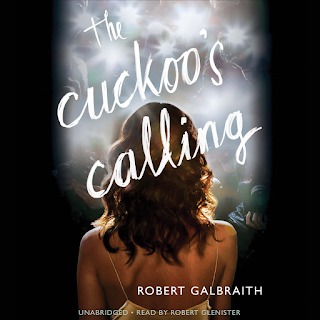
The Cuckoo's Calling


Cuckoo's Calling is the first mystery novel written by Robert Galbraith, or—as "he" is better known—J.K. Rowling. The fact that J.K. Rowling is so famous and popular can skew opinion of her books (which is why she tried to publish it under a pseudonym in the first place), but fear not: I was never a huge Harry Potter fan, and, while I did initially add Cuckoo's Calling to my pile because it was J.K. Rowling's mystery book, I had completely forgotten about that until literally the moment I started to write this review. So my opinion is completely unbiased!

Detective Galileo / 探偵ガリレオ


Detective Galileo is a short story collection by Higashino Keigo about how you probably learned everything you ever needed to know to solve crimes in your 10th grade science class.

The stories center around Kusanagi Shunpei, a detective in the Tokyo Metropolitan Police Department, who often goes to his friend Yukawa Manabu, a physics professor, for help with particularly confounding cases. The stories are interesting and have cool ideas behind them, but probably won't satisfy readers looking for traditional detective stories.

Hacknet


Wazzup, have you ever wanted to be a leet haxor and backdoor the mainframe by overclocking the firewall? Well, now you can with the hacking simulator Hacknet! (Not to be confused with Nethack.)

In all seriousness, Hacknet is a pretty nifty puzzle game that recreates the feeling of a hacker in a Hollywood movie. It's awesome.

The ???????? Murder Case / 〇〇〇〇〇〇〇〇殺人事件


That is not a mistake in the post name!

The central gimmick of The ???????? Murder Case is that the true title has been hidden, and you're supposed to deduce it from the story. Trying to deduce the title is a novel idea that... doesn't really add much to the book. While the title gimmick and actual plot were fun enough for The ???????? Murder Case to become the 50th recipient of the Mephisto Prize, I don't think it's the right book for everybody.

The Mill House Murders / 水車館の殺人


The Mill House Murders is the sequel to Ayatsuji Yukito's Decagon House Murders, and once again features our unlikely detective Shimada Kiyoshi looking into a series of murders that takes place in a home made by the eccentric late architect Nakamura Seiji.

While The Decagon House Murders is a classic in Japanese mystery fiction that is credited with starting the 'shin-honkaku' movement, I didn't like it very much, for reasons I will touch upon later in this review. But Mill House Murders was fantastic, providing a satisfying resolution to a long string of mysterious events at a nearly perfect level of cluing.

Every Fifteen Minutes


Eric Parrish is a good guy. Okay?

Like, a really good guy.

He’s a brilliant doctor—the head of his hospital’s psychiatry ward!—and legitimately cares about his patients and making them better. He’s courteous, respectful, handsome (he has the cuttest abs of all the dads), diligent, and hard-working. He’s a loving father to his seven year old daughter, and still cares deeply for his ex-wife, even though she left him and is acting like a massive jerk in their divorce proceedings.

But bad stuff keeps happening to him! And he’s such a good guy! Don’t you feel bad for him? He’s so good! And this stuff is so unfair! Argh!!

Children of Zodiarcs


I don’t usually like SRPGs, but an SRPG card game? Sign me up!

...Maybe I should have trusted my preferences more.